
|
| Home About airlinks Products Our Service Contact Us |
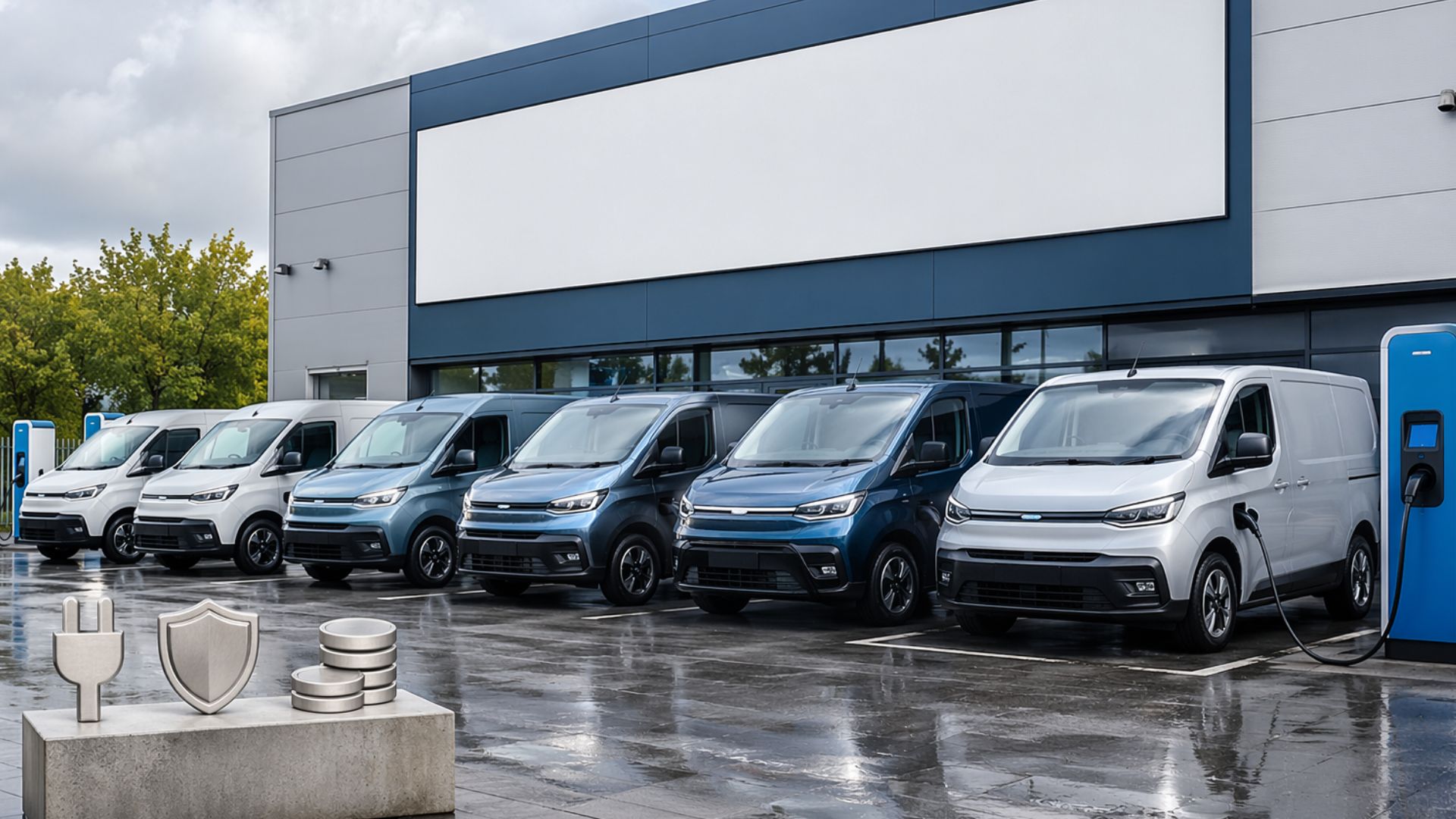
Published by Hippo Leasing, the UK's trusted vehicle leasing specialists, offering a comprehensive range of cars and vans, including electric models, zero deposit contracts, and flexible finance options designed for businesses and individuals with all types of credit history.
For most small business owners, the switch to an electric van has never really been about scepticism; it has been about cash flow. Putting down a significant deposit before a single delivery has been made or a single job has been invoiced is simply not how lean businesses operate. A no-deposit electric van lease changes that equation entirely. You agree a manageable monthly payment, drive away in a brand-new zero-emission vehicle, and keep your working capital exactly where it belongs: in your business.
Hippo Leasing has built its reputation helping UK businesses access flexible, affordable lease agreements, including zero deposit and bad credit options, across one of the widest panels of lenders in the country. The six electric vans in this guide cover everything from compact urban runabouts to large-panel workhorses, and all of them are available without a deposit. Here is how they compare across the metrics that matter most to working businesses:
|
Van |
Approximate WLTP Range |
Load Volume |
Approximate Payload |
Best Suited To |
|---|---|---|---|---|
|
Ford E-Transit Custom |
Up to 236 miles |
5.8 m³ |
~1,100 kg |
Trades and service businesses |
|
Mercedes-Benz eVito |
Up to 162 miles |
6.0 m³ |
~887 kg |
Client-facing professionals |
|
Renault Master E-Tech |
Up to 205 miles |
Up to 13 m³ |
~1,100 kg |
High-volume delivery operators |
|
Citroen ë-Berlingo |
Up to 174 miles |
Up to 4.4 m³ |
~600 kg |
Local tradespeople and artisans |
|
Vauxhall Vivaro Electric |
Up to 205 miles |
Up to 6.1 m³ |
~1,000 kg |
Multi-trade and regional teams |
|
Vauxhall Combo Electric |
Up to 174 miles |
Up to 3.9 m³ |
~700 kg |
Couriers and urban retailers |
Range figures are manufacturer WLTP estimates and will vary depending on load, speed, temperature, and driving conditions.
Ford has long been a name synonymous with working vans in the UK, and the E-Transit Custom makes a compelling argument that electric does not mean compromise. With an official WLTP range of up to 236 miles and a payload of around 1,100 kg, it handles a full working day of site visits, materials, and tool storage with room to spare. The load space is thoughtfully designed, with practical features that tradespeople will genuinely appreciate, and the driving experience is noticeably more refined than a diesel equivalent, which matters when you are covering 100-plus miles a day.
For a small plumbing or electrical contractor with two or three vans on the road, the E-Transit Custom makes particularly strong sense. The running cost savings, zero Clean Air Zone charges, and reduced servicing requirements all feed directly into the bottom line, and with a no-deposit lease, none of those benefits require a large upfront commitment. Ford's established UK dealer and service network also means that support is rarely far away.
Key highlights at a glance:
The Mercedes-Benz eVito occupies a distinctive position in the electric van market. It brings the refinement and brand presence that Mercedes-Benz is known for, combined with the genuine carrying capacity of a medium panel van. With a load volume of around 6.0 m³ and a payload of approximately 887 kg, it is well-suited to businesses that transport goods or equipment but also need to make a strong first impression when they pull up outside a client's premises. The cabin is quiet, comfortable, and built to a standard that feels more executive car than commercial vehicle.
A small events or catering business would find the eVito an excellent fit. The combination of load capacity, smooth driving manners, and the Mercedes badge sends the right signals to clients while still delivering practical on the job. With WLTP range figures of up to 162 miles, it is best suited to businesses with a defined daily route rather than unpredictable long-distance work, making it ideal for urban and suburban operators who start and end each day from the same base and can charge overnight.
Key highlights at a glance:
The Renault Master E-Tech is where electric van capability steps up to a genuinely large scale. With load volumes reaching up to 13 m³ depending on the body variant selected, and a payload of approximately 1,100 kg, this is a van that takes on the kind of work that used to be the sole territory of diesel workhorses. The updated E-Tech powertrain delivers a meaningful improvement in range compared to its predecessors, with WLTP figures of up to 205 miles making full-day, multi-drop operations far more practical. Renault has clearly engineered this with commercial operators in mind rather than treating it as a conversion afterthought.
An independent furniture or appliance delivery business would find the Master E-Tech a very strong match. The load bay is large enough to handle bulky items without needing to be creative with packing, and the improved range means a realistic working day of deliveries across a city or county is achievable without range anxiety. The lower fuel and servicing costs versus a diesel master help protect margins, and in cities with Clean Air Zone charges, the savings can be substantial over the course of a full lease term.
Key highlights at a glance:
The Citroen ë-Berlingo is the kind of van that earns its place through sheer practicality rather than headline specifications. Compact enough to navigate city centres and residential streets with ease, yet generous enough inside to carry a meaningful amount of equipment or stock, it occupies a sweet spot for businesses that work locally and need a van that feels like an extension of their daily routine rather than a vehicle they have to think about. The load volume of up to 4.4 m³ and a WLTP range of up to 174 miles make for a reliable combination for typical urban and semi-rural working days.
A local florist or artisan baker making morning deliveries across a town or district would find the ë-Berlingo an excellent choice. The compact footprint means parking is rarely a problem, and the electric drivetrain eliminates the diesel clatter that can feel incongruous when you are delivering handmade goods. The ë-Berlingo also benefits from Citroen's well-regarded ride quality, making it genuinely comfortable to drive across the working week. For businesses looking to keep their carbon footprint and their overheads in check simultaneously, it is a well-balanced and affordable option.
Key highlights at a glance:
The Vauxhall Vivaro Electric sits comfortably in the mid-size segment of the electric van market and does so with the kind of confidence that comes from being genuinely well-rounded. With WLTP range figures of up to 205 miles, a payload of around 1,000 kg, and a load volume of up to 6.1 m³, it offers a strong combination of capability and range that makes it suitable for a wide range of business types. The driving position is ergonomic, the cabin is practical, and the overall build quality reflects Vauxhall's ongoing investment in its commercial vehicle range.
For a small regional heating or air conditioning business with engineers covering a defined patch, the Vivaro Electric is a very natural fit. The load space accommodates a reasonable quantity of parts and equipment, and the longer range means engineers can cover their area without needing to plan around charging mid-shift. The fact that it shares its underpinnings with the Peugeot e-Expert and Citroen ë-Dispatch also means servicing support is broadly available, which is a practical reassurance for businesses that rely on keeping their vans on the road.
Key highlights at a glance:
The Vauxhall Combo Electric might be the smallest van on this list, but it punches well above its weight for the type of business that genuinely needs it. With a WLTP range of up to 174 miles and a payload of approximately 700 kg, it handles urban and suburban workloads with ease, and its compact dimensions make it a natural choice for anyone who spends their working day navigating tight streets, busy car parks, or residential zones. The load volume of up to 3.9 m³ is more than adequate for high-frequency, lower-volume deliveries or light trade work.
An independent online retailer or small courier business operating a same-day delivery model across a city would find the Combo Electric a compelling option. The lower cost base compared to a larger van, combined with strong range and zero urban emission charges, can meaningfully improve the unit economics of each delivery. For sole traders in particular, leasing a Combo Electric on a zero-deposit agreement means getting a new, reliable, and well-equipped vehicle into service without tying up cash, making it one of the most accessible entry points into electric van operation available today.
Key highlights at a glance:
Whether you run a one-van operation or are looking to electrify a small fleet, the vans featured in this guide demonstrate that there is now a credible, practical, and affordable electric option for almost every kind of small business in the UK. Each of these models is available through Hippo Leasing on a zero-deposit contract hire agreement, meaning the switch to electric does not have to wait for a windfall or a significant injection of working capital. With lower running costs, clean air zone exemptions, and the reliability of a brand-new vehicle under a fixed monthly payment, a no-deposit electric van lease represents one of the more straightforward financial decisions a small business owner can make in 2025.
Can I get a no-deposit electric van lease with bad credit?
Yes, and it is worth knowing that no-deposit and bad credit are two entirely separate considerations that can be combined. Hippo Leasing works with a wide panel of lenders who regularly consider applicants who have a history of poor credit, CCJs, defaults, or limited credit footprint. Having a weaker credit profile does not automatically disqualify you from a zero-deposit electric van deal.
Do electric vans cost less to run than diesel vans?
In most cases, yes. Charging an electric van costs considerably less per mile than filling a diesel tank, particularly when using an overnight business tariff. Electric vans also have fewer mechanical components, which typically translates into lower servicing costs across the life of a lease. On top of that, electric vans are exempt from Clean Air Zone and Ultra Low Emission Zone charges in the majority of UK cities, a saving that can accumulate significantly for vans completing regular urban work.
How does overnight charging work for electric van drivers?
The majority of electric van operators charge their vehicles overnight at their base using a dedicated wall-mounted charge point, typically a 7 kW or 22 kW AC unit. This approach means the van is ready at full range each morning without any interruption to the working day. Most businesses qualify for grant-funded charge point installation through workplace charging schemes, and many energy suppliers offer overnight business tariffs at significantly lower rates. For businesses without off-street parking, public charging networks continue to expand rapidly across the UK.
Can I put a no-deposit electric van lease through my business?
Yes. Where a van is leased in the business's name and used wholly or primarily for business purposes, lease payments can generally be offset against taxable profits. VAT-registered businesses are typically able to reclaim 50% of the VAT on lease payments, or 100% where the vehicle is used exclusively for business purposes. Electric vans also attract lower Benefit-in-Kind rates than diesel alternatives where applicable. It is always advisable to confirm the specific tax position with your accountant, as individual circumstances differ.
How much range do I actually need for daily business use?
Most small and medium-sized electric vans on the market today offer between 160 and 220-plus miles of official WLTP range. For a full day of local deliveries, multi-drop courier work, or trade site visits with overnight charging at base, that is comfortably sufficient. Where your routes are longer, motorway-heavy, or less predictable, it is worth talking through your typical driving patterns with a leasing consultant before settling on a specific model.
Is a no-deposit electric van lease more expensive overall?
You will typically pay a slightly higher monthly amount than you would with a deposit in place, because the total cost of the lease is distributed across your monthly payments rather than being partly offset upfront. Given that electric vans generally carry a higher list price than comparable diesel models, removing the deposit requirement is often what makes switching to electric financially viable now rather than in two or three years when savings have built up.
Hippo Leasing is a UK-based vehicle leasing specialist and one of the country's foremost providers of bad credit and zero deposit leasing solutions, supporting businesses and private customers across the UK in securing the right electric vans at competitive monthly rates. For a no-obligation quote on any of the models featured in this guide, visit hippoleasing.co.uk or get in touch with the team directly by phone.
 |
Airport Operations Association |
 |
Confederation of Passenger Transport |
 |
Copyright ©airlinks 2004 |
 |